Retaining Walls
A retaining wall fails when water builds up behind it, so drainage is the whole game. We set a proper footing below grade, reinforce the wall for the load it holds back, and build in drainage behind it with gravel backfill and weep holes or a drain line so water has somewhere to go. We give the wall the right batter and tie it together so it stays put through wet seasons and dry ones. Walls that skip the drainage lean and crack within a few years. Ours are built so they do not.
Get a Free Estimate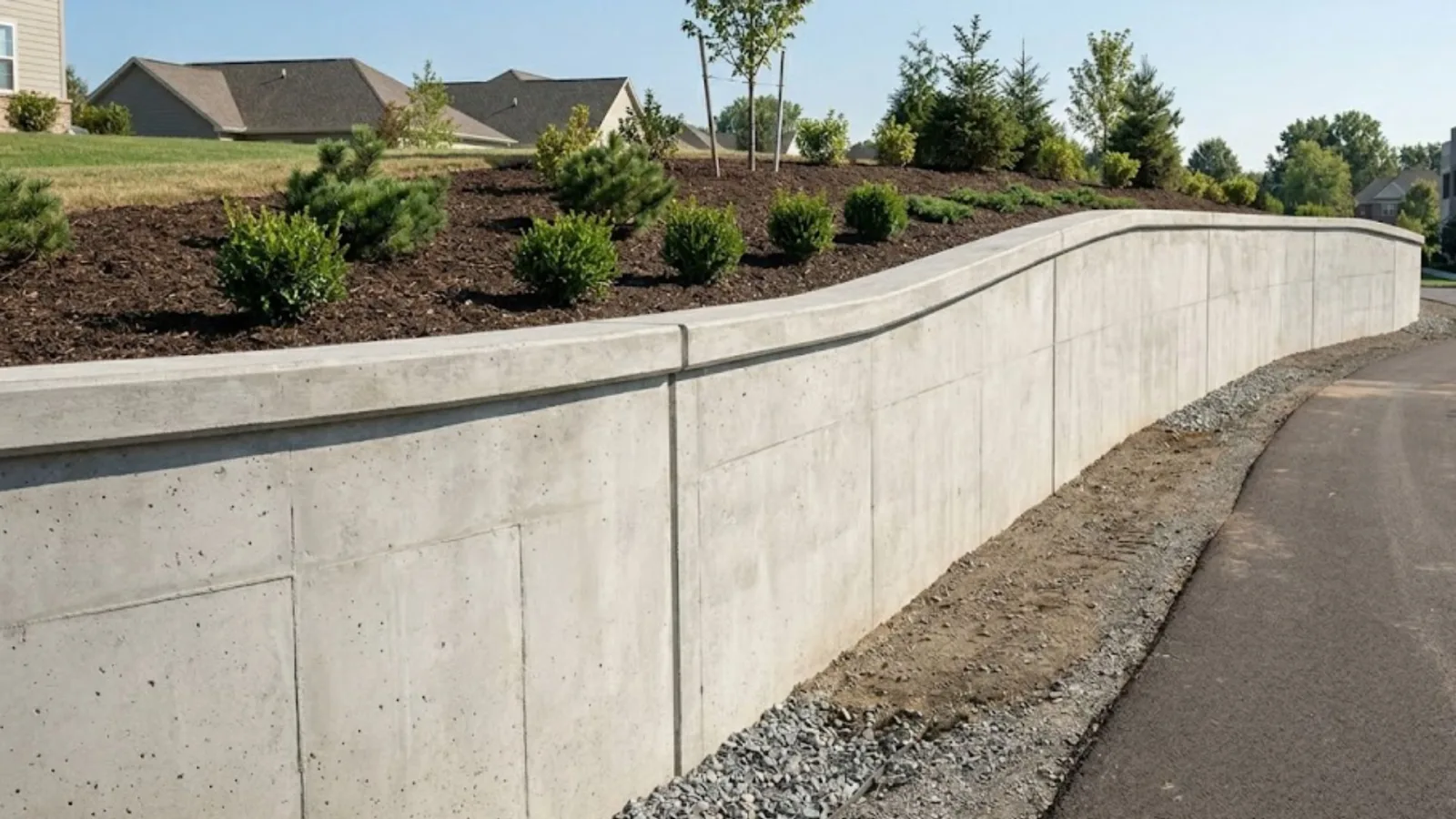
Why drainage decides whether a wall lasts
A retaining wall holds back soil, and wet soil is heavy. When water builds up behind a wall with nowhere to go, the pressure pushes the wall out, and that is how walls lean, bow, and crack. We build drainage into every wall: gravel backfill behind it and weep holes or a perforated drain line at the base so water escapes instead of stacking up. A wall built without that drainage may look fine for a year or two, then start to fail. Ours are built so the water has a way out.
Footing, reinforcement, and batter
A wall is only as solid as its footing. We set a footing below grade, sized and reinforced for the height and the load the wall holds back, then reinforce the wall itself with steel. We give it the right batter, a slight lean back into the slope, so the soil works with the wall instead of against it. Whether the wall is poured or block, the footing, the steel, and the drainage are what keep it standing.
Built Right, Start to Finish
- Footing set below grade
- Reinforced wall
- Gravel backfill and weep holes or drain line
- Proper batter
- A wall built to last